
Gleam Energy
Role Founder • Product Design • UX Research • Frontend Development • AI • Product Strategy
Years 2023–PRESENT
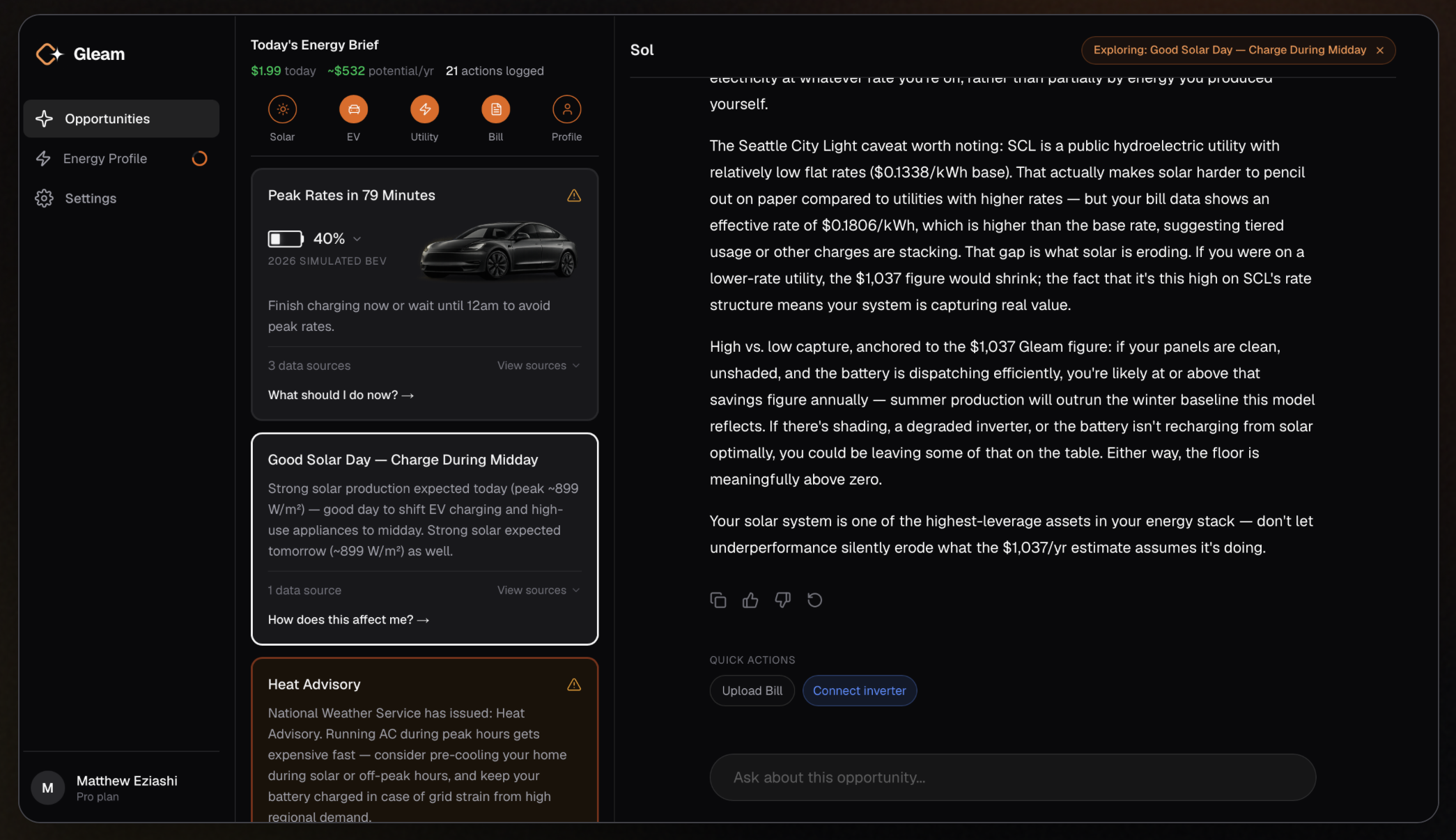
I transformed fragmented energy data into clear, personalized opportunities, helping homeowners make smarter decisions that reduce their energy costs.
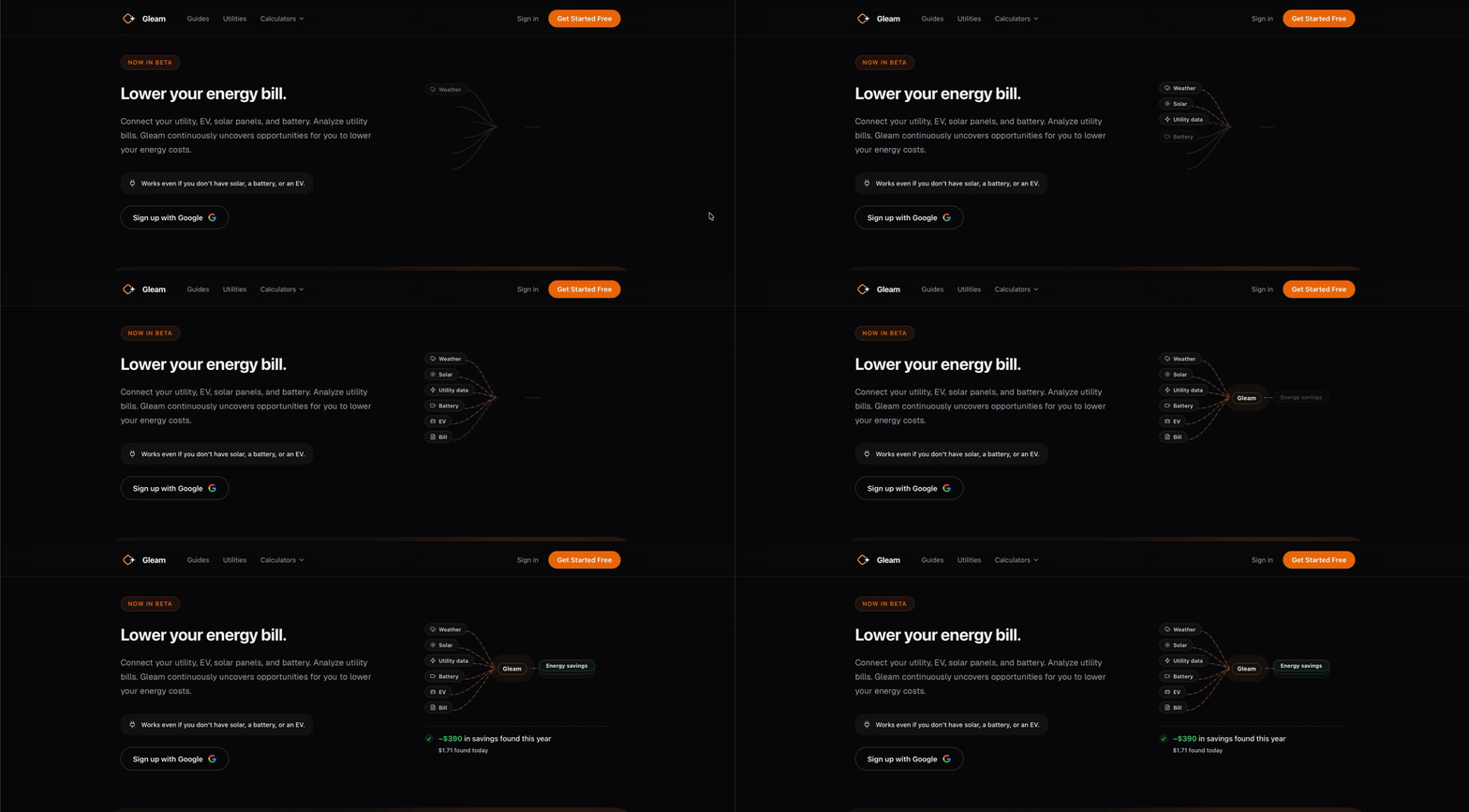
PROBLEM
Installing solar panels, buying an EV, or investing in a battery doesn't automatically lower your energy bill. Most homeowners don't know whether they're on the right electricity plan, charging at the right time, or taking advantage of available savings. Existing tools show data—but rarely tell people what to do next.
There’s tons of data people aren’t seeing, or aren’t able to act on.
OPPORTUNITY
More than 5 million U.S. homes have rooftop solar, and EV adoption continues to accelerate. Yet homeowners still piece together information across utility websites, inverter apps, charging apps, and spreadsheets.
I saw an opportunity to build a single product that answered one question:
"Given everything I know about your home, what's the smartest thing you should do next?"
My Role as a Founder
Over the course of the project I:
Defined product strategy
Conducted dozens of customer interviews
Designed every user experience
Built the frontend in Next.js
Integrated AI workflows
Created the marketing website
Built SEO landing pages
Launched calculators to drive organic traffic
Shipped the mobile app
Iterated continuously based on user feedback
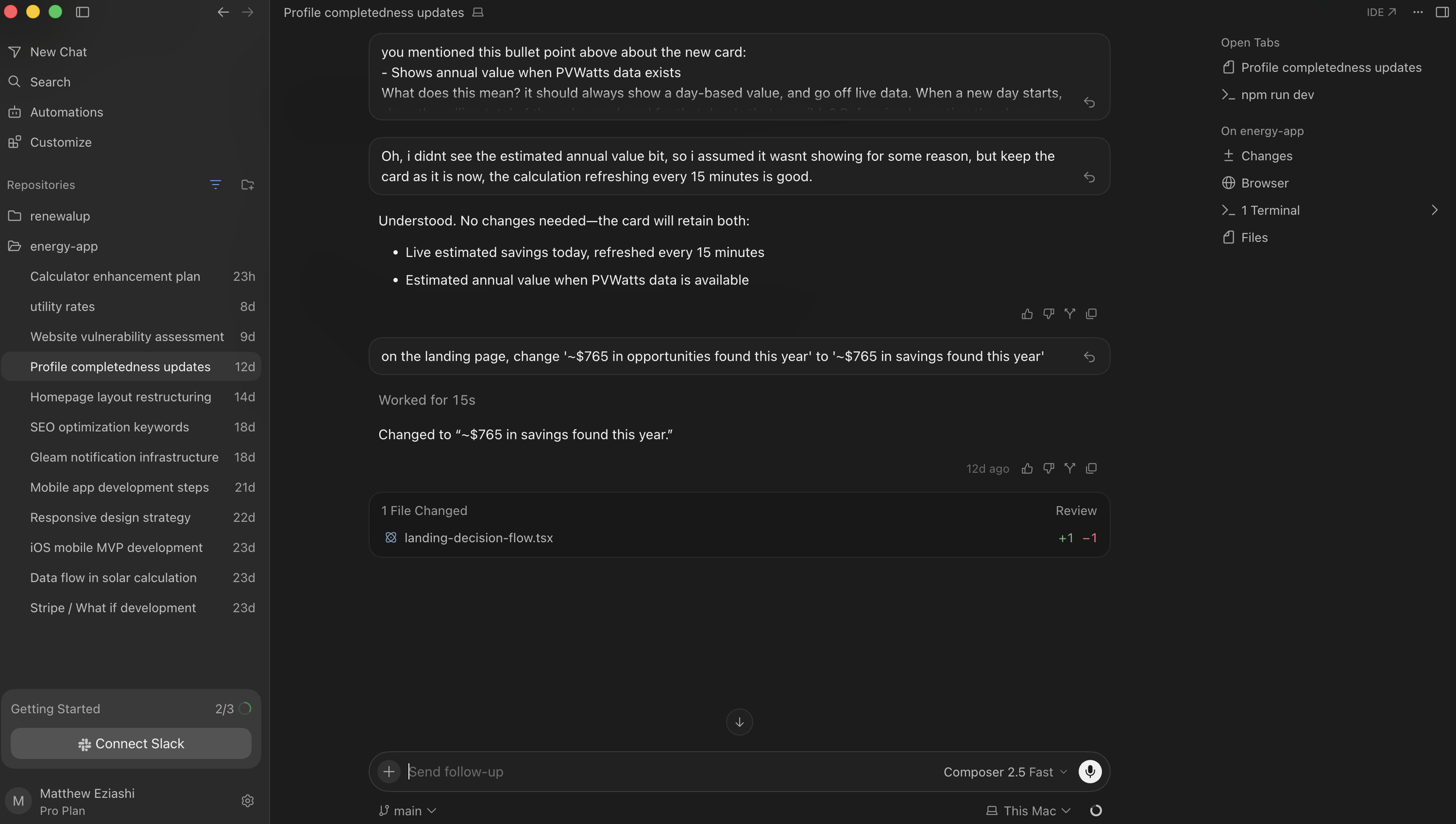
Tools: Cursor, Claude, Chatgpt, Supabase, Vercel
DESIGN PRINCIPLES
Don't overwhelm homeowners
Energy is already confusing.
Every screen should answer one question clearly instead of exposing every possible metric.
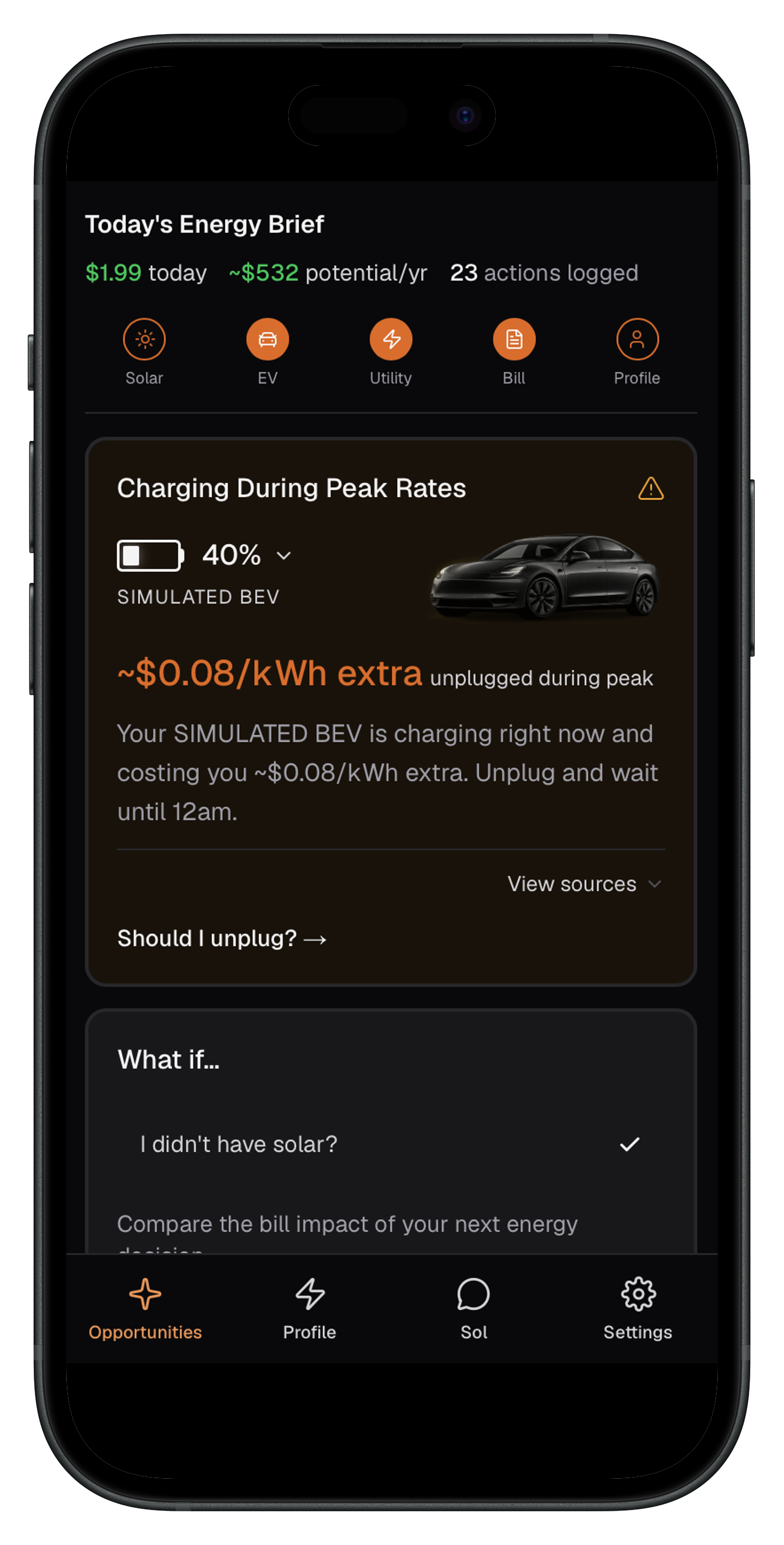
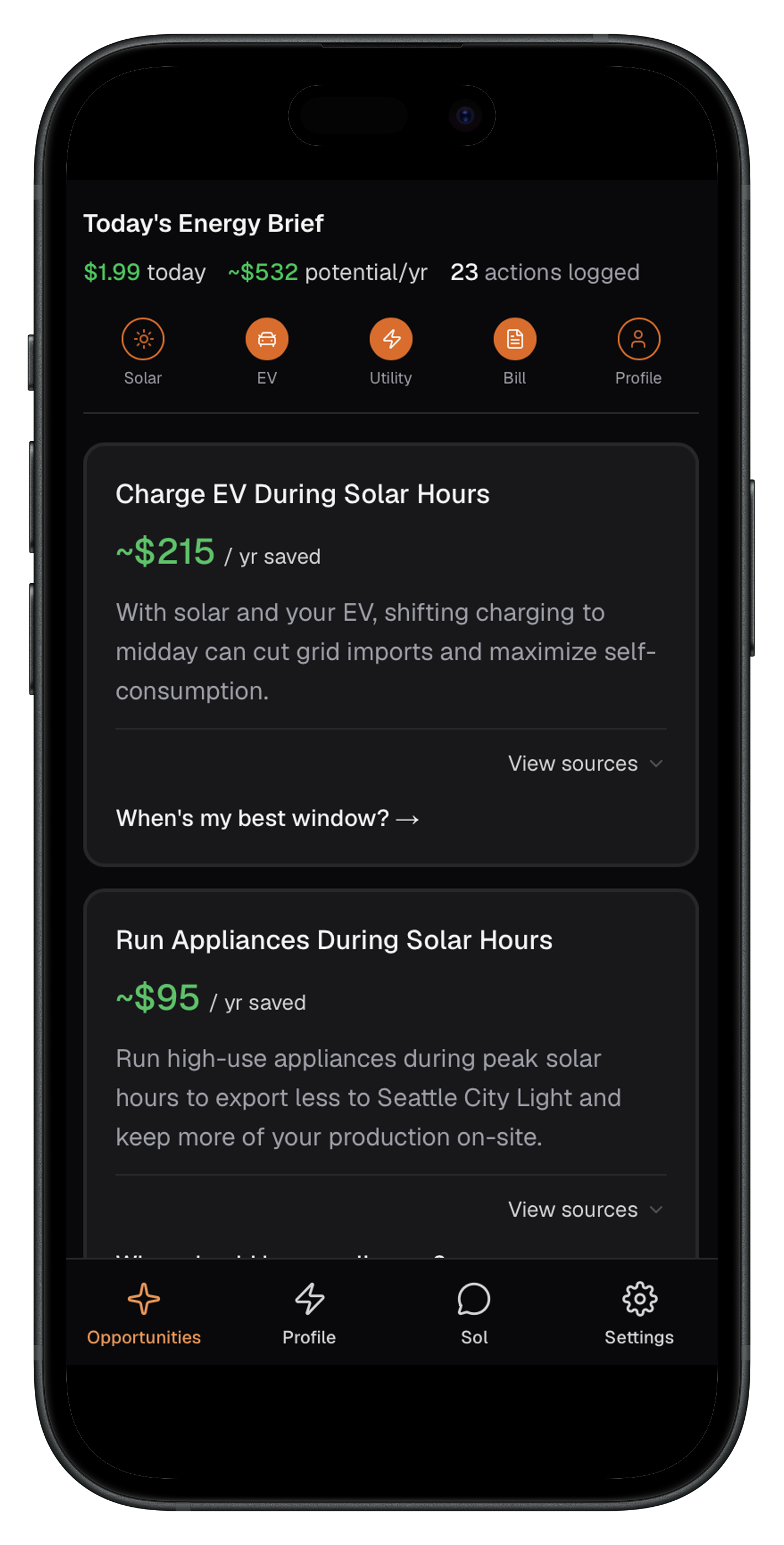
Recommendations over dashboards
Most competitors show graphs.
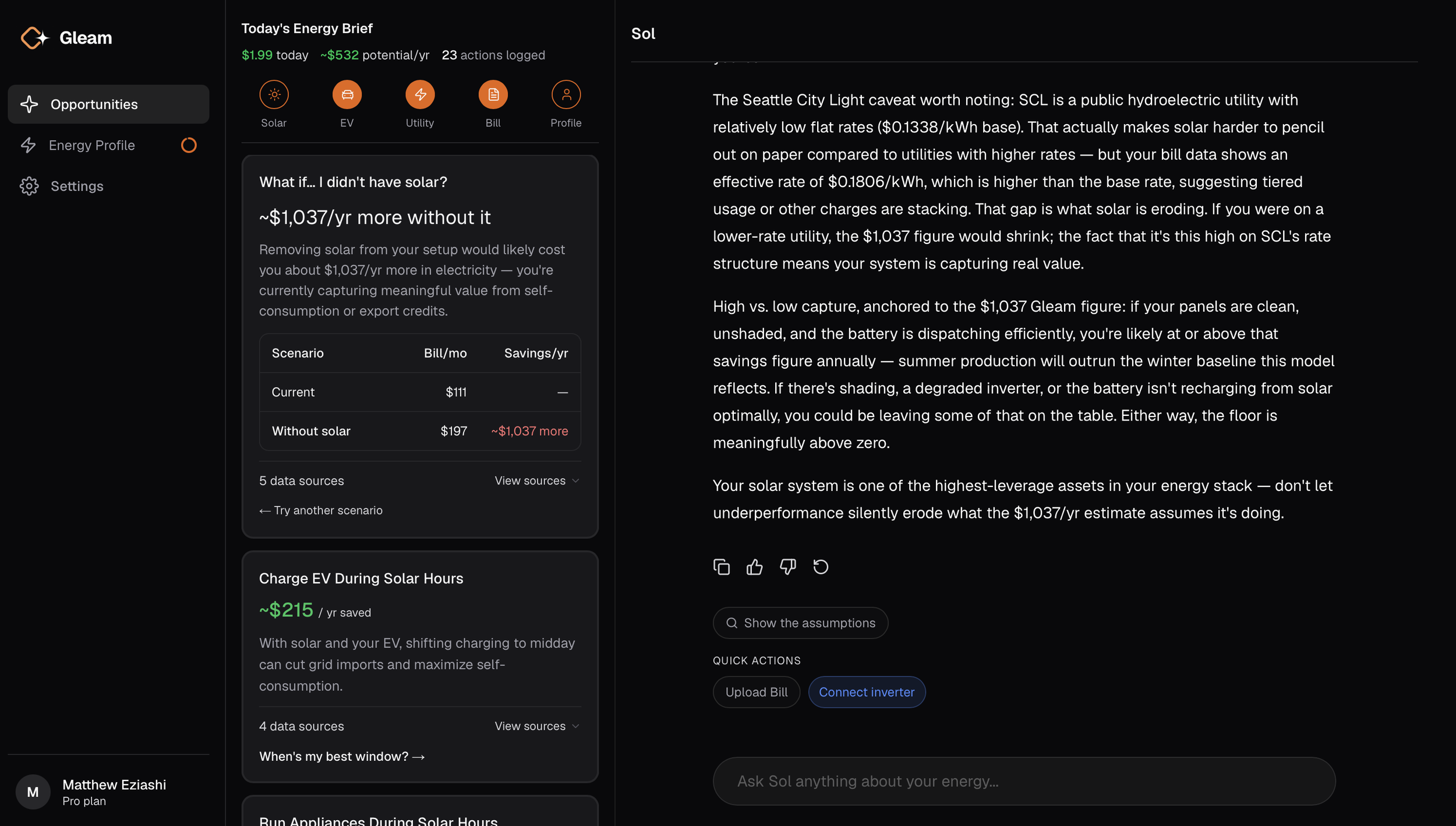
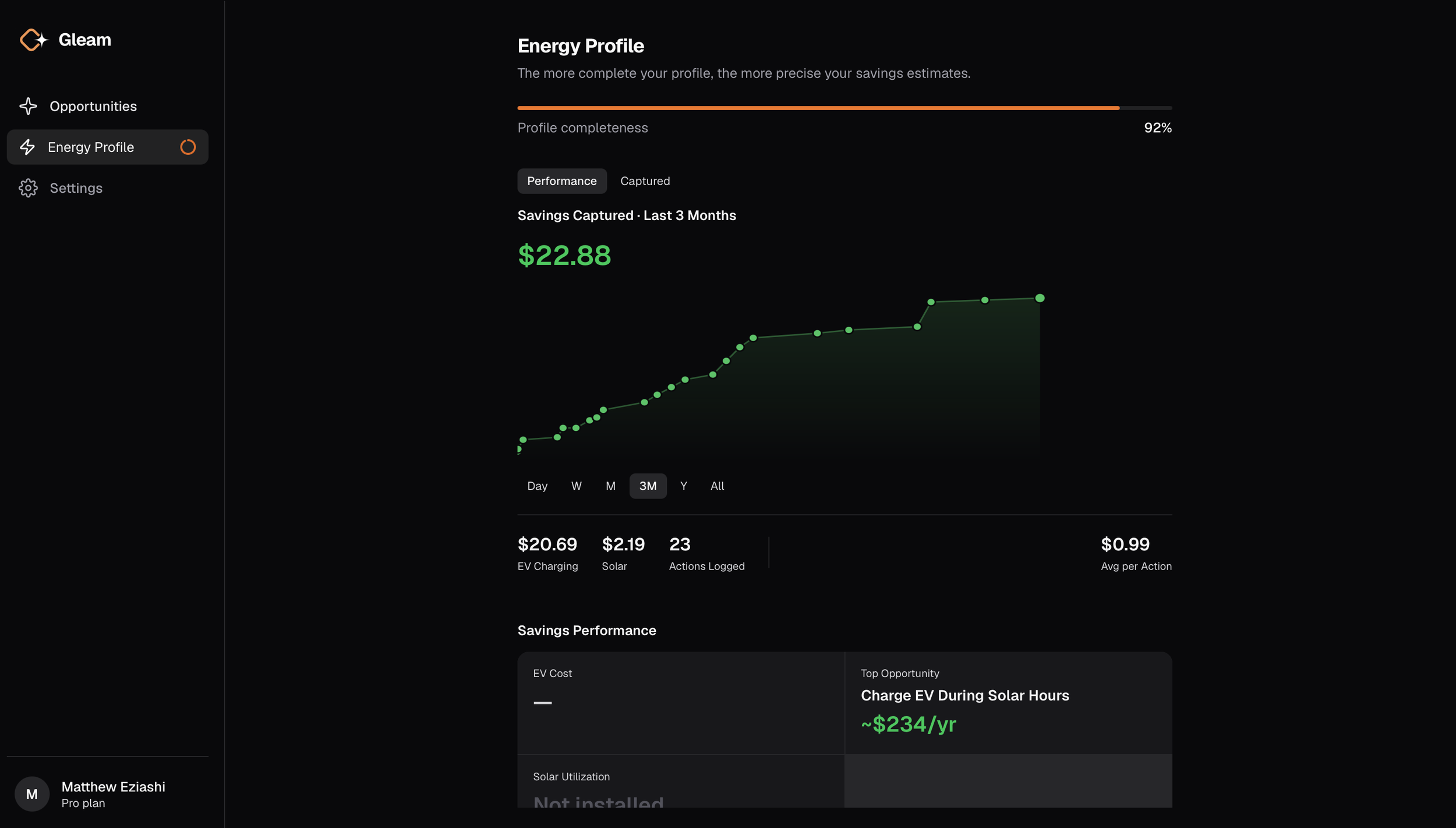
Gleam tells people exactly what action to take and estimates how much money it's worth.
Connect data only when it creates value
Integrations with utilities, solar systems, and EVs exist to reduce manual work—not to impress users with more charts.
USER RESEARCH
Research changed my roadmap.
I initially believed homeowners wanted better energy dashboards.
After interviewing solar owners and posting concepts across Facebook communities, Reddit, and LinkedIn, a different pattern emerged.
People said things like:
Why are rate plans so confusing?
Why is my bill so high? Why did it change?
When should I charge my EV?
How much am I actually saving?
What rebates am I missing?
1. TOU switching is a real, recurring pain point — and it's manual/annoying
[user A] needed a whole new meter installed ($340 + labor) to switch plans
[user B] had to make annual phone calls to stay on TOU due to community choice aggregation
[user C] took ~2 billing cycles after calling in to switch to TOU-D-PRIME
Multiple people mention the actual mechanism (call utility vs. website) is unclear — the exact question [user D] asked and got answered inconsistently
2. The math people do to decide is crude and manual — exactly my wedge
[user E] explicitly did a break-even analysis on whether TOU makes sense and concluded no, without home battery/insulation
[user F] called out that advertised TOU rates are misleading due to tariffs/delivery charges — their real off-peak rate was 8.5¢ vs advertised 2.3¢
[user G] needed a full home automation stack (EVCC + Home Assistant) just to avoid "going mad" doing this manually 😅
Rather than building another monitoring app, I shifted the product toward personalized recommendations.
DESIGNING THE AI EXPERIENCE
Rather than exposing a generic chatbot, I designed Gleam around context-aware recommendations. Every AI response considers location, utility provider, electricity rate, EV model, charger type, solar production, battery ownership, and a few other datapoints before generating advice.
BUILDING TRUST
Real money is at stake here.
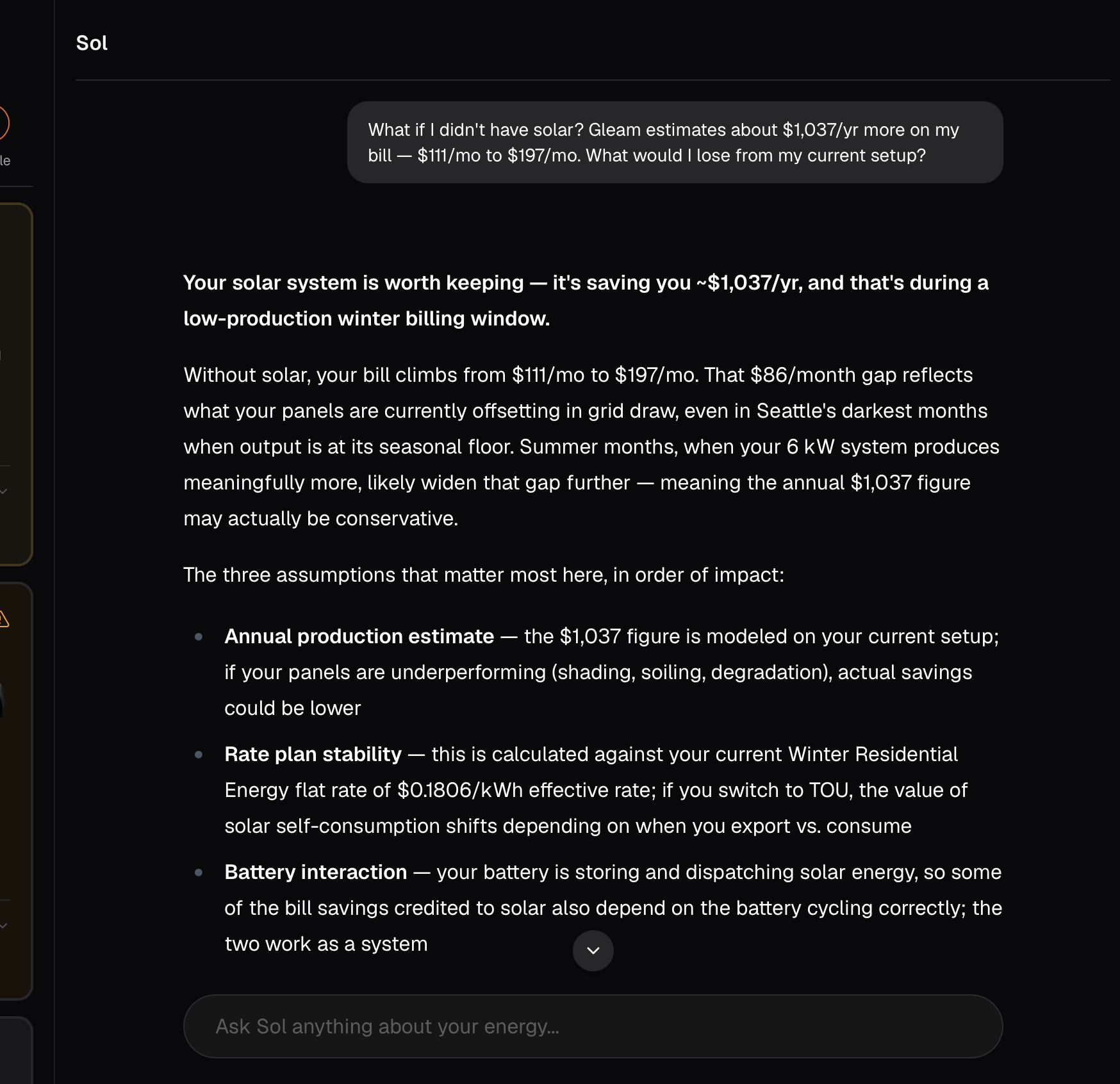
Users needed confidence that recommendations are grounded in data.
Design decisions included:
Explain recommendations
Estimate savings, not ‘exact’
Clearly communicate confidence
Distinguish connected data from estimated data
BIGGEST CHALLENGES
Building with incomplete data
Not every utility exposes customer energy usage.
I designed fallback experiences that still provide useful recommendations using partial information.
Avoiding feature overload
There are hundreds of ways homeowners can save money.
Prioritizing only the highest-impact recommendations made the product significantly easier to understand.
Balancing AI confidence
Users expect certainty.
Energy recommendations often require assumptions.
Designing transparent explanations became just as important as recommendation accuracy.
OUTCOMES
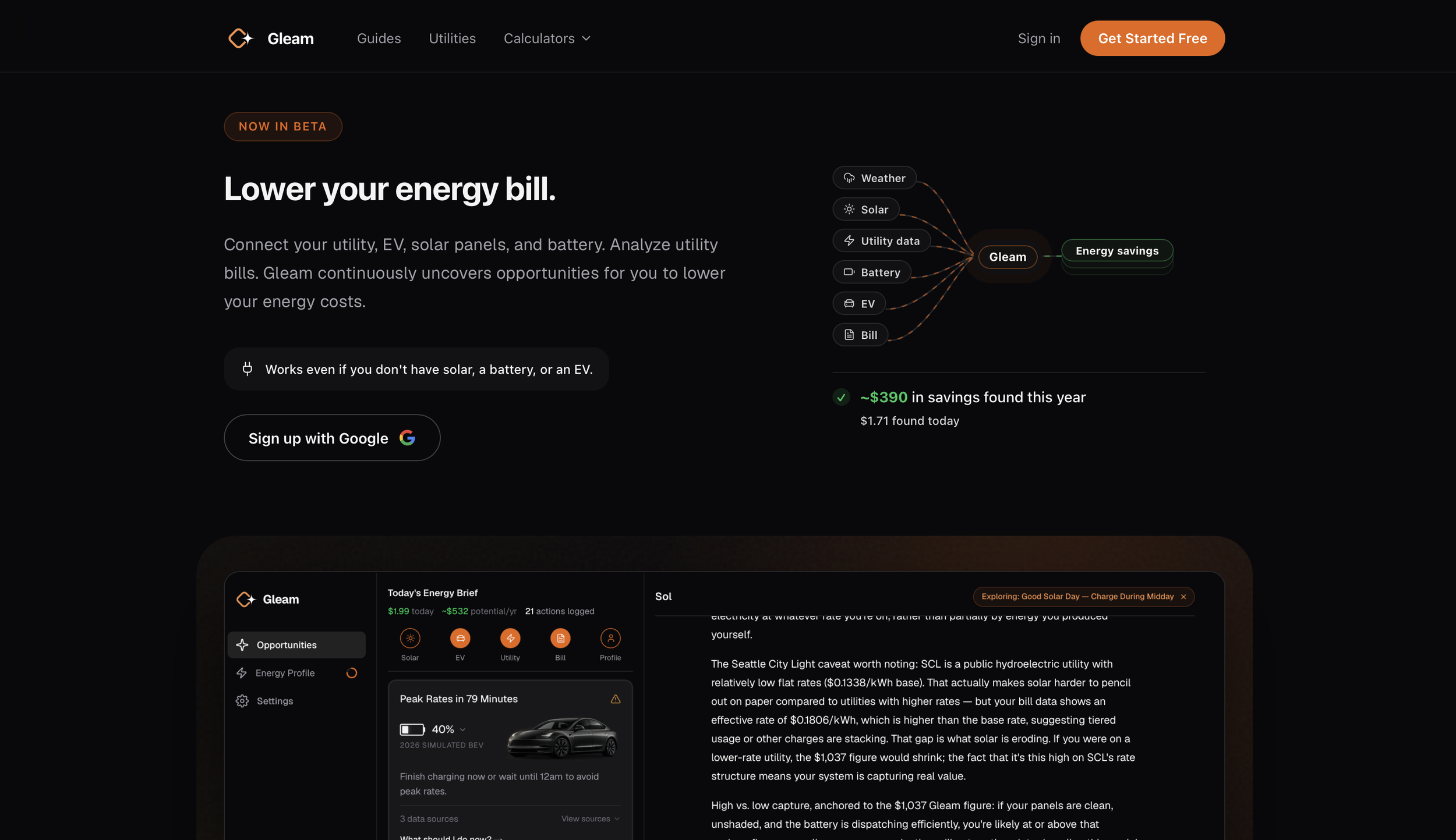
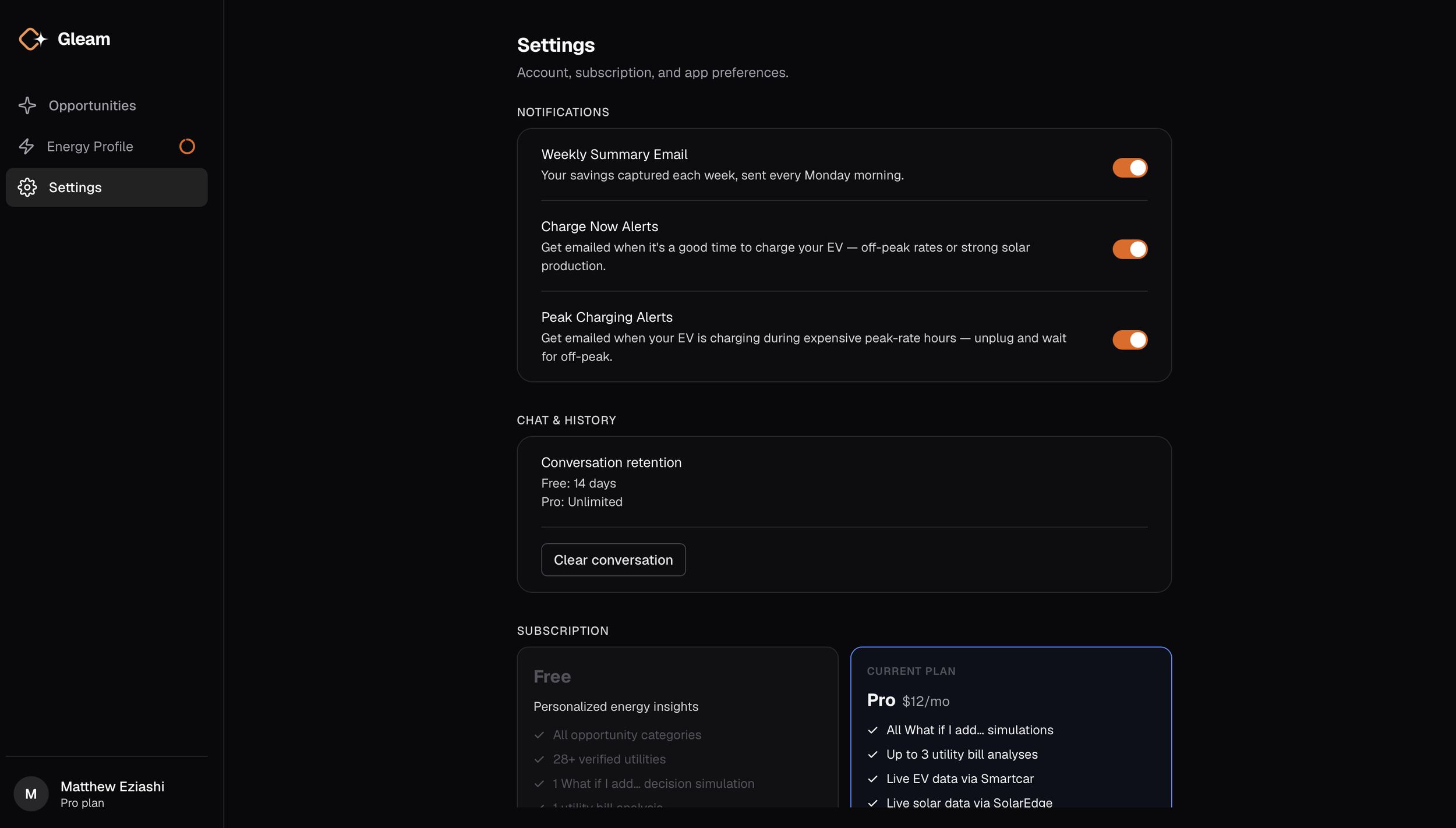
Launched web and mobile experience
Built end-to-end by a solo founder
Validated product direction through customer research
Generated organic search traffic through SEO calculators and utility content
Established a scalable foundation for future integrations with utilities, solar providers, and EV platforms
Building Gleam fundamentally changed how I think about product design.
The biggest lesson wasn't learning new technologies—it was two-fold:
Learning to let research reshape the product.
Making product decisions is a real skill.
The original vision centered on dashboards.
The final product focused on opportunities.
That shift—from showing information to helping people take action—became the defining principle behind every feature I built.